STRAIGHTENING BUCKLED RIMS
Wheel straightening
When a wheel shakes or a pothole has pulled the rim out of round, the shape comes back under the press, step by step.
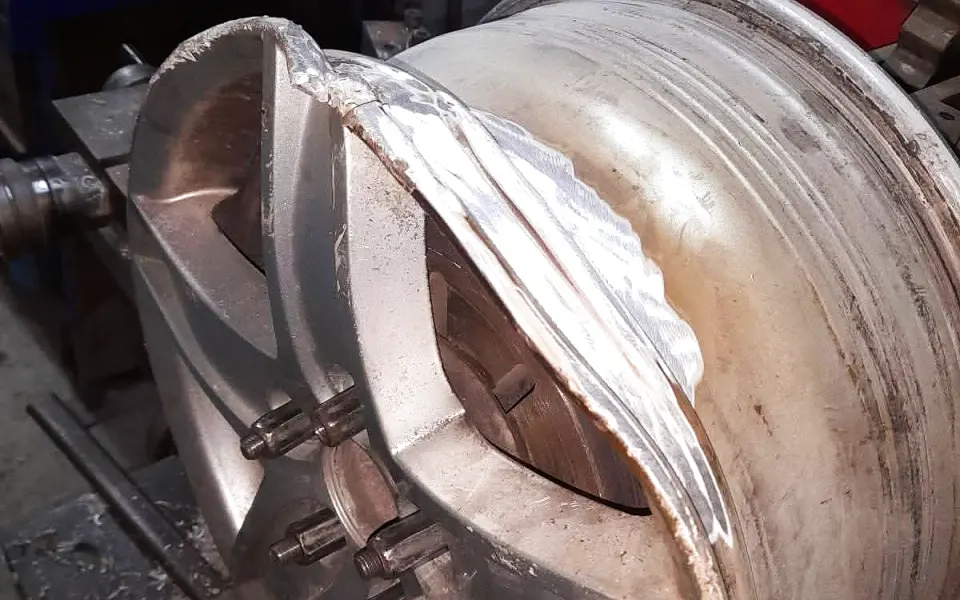
A bent wheel is felt before it is seen
A buckled rim is rarely obvious to the eye. First comes a vibration in the steering out on the open road, then unrest in the seat, and later uneven tyre wear. Balancing does not help at that point, because weights correct mass while the problem is the shape.
Straightening is done on the press. The wheel is clamped, the point that runs out is located, and the metal is pushed back towards a true circle under pressure, in small stages and with heat where aluminium asks for it. Bending it quickly would create a crack, so the work is deliberately slow.
After straightening we watch how the wheel sits while spinning. If the impact was heavy there is often a small crack or a thinned patch left that needs welding, so the two jobs run together. If the rim cannot be brought back inside safe limits, we say so without dressing it up.
Signs that a wheel runs out
- Vibration in the steering that grows with speed
- Unrest in the seat although the tyres are new
- A tyre wearing in bands across the tread
- The wheel losing air with no visible puncture
- Balance weights getting heavier every time
Kinds of distortion we correct
From a slight wobble you only feel through the steering to a rim that has visibly stopped being a circle.
Lateral runout
The wheel moves left and right as it turns. It feels like a swaying steering wheel and usually follows a sideways hit against a kerb or a drain cover.
Radial runout
The wheel hops up and down because the circle is no longer true. This is typical after a deep pothole and shows up fastest when the rim is spun.
Dented bead seat
The lip the tyre seals against is pushed inwards. The wheel loses air, and on fitting the tyre does not sit down evenly all the way round.
Oval rim
A hard impact can pull a wheel so far out that it is no longer round. These are taken on too, but the metal is checked for cracks before any pressure is applied.
The straightening procedure
Four stages, from the first check on the spinner to a rim that finally runs quietly through the circle.
Check while spinning
The wheel is mounted and turned to show how far it runs out and exactly where, both radially and sideways. Only then is the real amount of work known.
Pressure on the press
The deviation is pushed back hydraulically in small stages with constant checking. Aluminium is warmed where needed so it gives without cracking.
Checking the metal
After straightening we look for cracks and thinned areas. If there are any, welding comes first, before the wheel moves on to the next step.
Final runout check
The wheel spins once more and the measurement is repeated at the same points as at the start. The aim is for the deviation to drop into the range where the wheel runs quiet.
Why balance weights cannot fix a bent wheel
Weights distribute the mass of the assembly; they do not correct the shape of the rim. If the wheel runs out, the balancing machine at the tyre shop will keep asking for heavier weights and the vibration may fall a little, but it will not disappear. The geometry has to be put right first; without that the problem is only masked.
A buckled wheel does not only wear itself. An unsettled wheel puts extra load on the bearing, the track rods and the damper, and the tyre wears in bands. A repair is worth doing as soon as the vibration is noticed, because the damage is usually still limited to one rim and one tyre.
Questions about wheel straightening
Can a badly bent wheel be straightened?
Often it can. The press returns the metal in small stages, with warming where aluminium needs it, so even rims that have lost their true circle come back inside limits where the wheel sits calm. Before that we check for cracks, because metal that has split must not be stretched.
Does straightening weaken the wheel?
Worked slowly and with controlled warming, the metal moves back without splitting. Trouble starts when someone tries to force a rim straight in one go. That is why the area is inspected after every stage, and if a crack appears it is welded before the work continues.
Will I feel the difference straight away?
On the machine you see it immediately: a rim that used to run out by several millimetres follows a quiet line after straightening. On the road you feel the difference as soon as the wheel is back on the car. If unrest still remains, the cause is usually somewhere else: in the tyre, a bearing or the suspension.
Do all four wheels need straightening?
No. Only the one that runs out is worked on, and the others can be spun and checked if you bring them along. A pothole strike normally ruins one rim, sometimes two on the same side, so there is no reason to touch those that are still fine.
Can a wheel be straightened with the tyre still on it?
No, because the tyre hides exactly those areas that are damaged most often. It is pulled off here before the rim goes on the machine and refitted once the work is done. You simply bring the wheel as it is.
Do you straighten steel wheels too?
We do. A steel rim dents rather than cracks, so straightening is a very common job on it, especially on vans and winter sets. Once it is pressed back the area is cleaned up, and the wheel goes back exactly as it came in — only round again.
What most often follows straightening
If the impact left a crack or a thinned patch as well, the wheel goes from the press over to the welder.
Steering shaking? Check the wheels
Call or send a message, say at what speed the unrest appears, and arrange when to bring the wheels in.